
From factories to infrastructure projects, the bolts are a key component directly to stability over time as well as safety. Understanding their functions, designs and usage can assist contractors and engineers to avoid costly mistakes and increase overall quality of the project.
What Are Plate Type Foundation Bolts?
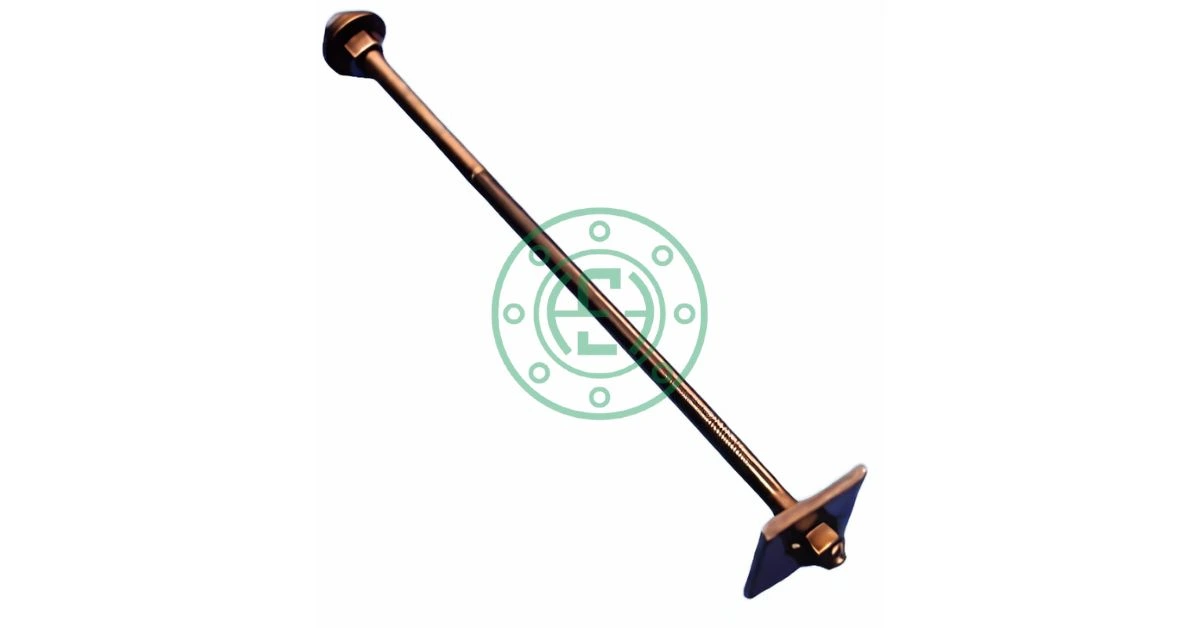
Contrary to standard anchor bolts, which depend on friction or threading, the plate makes the bond mechanically. The load can be spread more evenly over an area larger than the average and increases the resistance to forces pulling it out. In turn, they are ideally suited for high-load and heavy-duty applications in which stability is crucial.
The majority of them are made out of steel, and are custom-designed by the length, diameter, as well as dimensioning of plates based on the project needs.
Applications in Construction
Bolts for foundations made of plate are employed in a variety of industries in which strong and solid anchoring is vital. The ability of these bolts to endure the rigors of heavy load and vibrations make these bolts indispensable in mechanical and structural installations.
In industrial structures They are employed to secure steel columns as well as frame support structures. When it comes to infrastructure projects they play an essential part in stabilizing bridges towers and utilities structures. They can also be used in the fixation of heavy machinery in which even a slight shift could result in operational problems or cause damage.
In the manufacturing process, massive machinery like turbines or compressors need to be precisely in alignment. Plate bolts help ensure that the machines are held in place regardless of continuous tension and stress.
Advantages of Plate Type Foundation Bolts
One of the main benefits of Plate Type Foundation Bolts is their increased load-bearing capacity. The presence of plates enhances resistance to pull-out forces, making them highly reliable in demanding situations.
They also provide better stability, especially when that are subject to dynamic loads or vibrations. This stability decreases the possibility of structural movement, and also ensures the long-term durability of the structure.
One of the benefits is their flexibility. They can be customized in order to meet the specific needs of engineers with regards to dimension, material and even coating. If properly secured and installed these bolts will last for a long time as well as a longer service life.
Installation Process
Key Steps and Considerations
The process of installing plate-type foundation bolts demands precise planning and execution for proper alignment and efficiency. The procedure begins with precise position, and the bolts’ locations are determined using blueprints and structural designs. The accuracy of this step is crucial to avoid any misalignment later on in the process.
Once they are positioned in the desired position, the bolts should be secured prior to the concrete being poured. The bolts must be secured to stop any tilt or movement that might compromise their performance. Jigs or temporary supports are frequently used to ensure their correct position during the entire process.
When the concrete has been put in place, proper compaction around the plate guarantees a solid bond. After the concrete is cured it is performed to confirm the alignment, height of projections, and overall stability before structures are erected.
Design Considerations
Selecting the correct type of foundation bolt is a matter of evaluating many technical aspects. The load conditions, such as whether the force is dynamic or static and how they are distributed, play an important role in choosing the right type of bolt.
The depth of the embedment is a further factor to take into account, as a deeper installation generally increases the strength of holding. The size as well as the thickness of the plates directly affect how well loads are dispersed within the concrete.
Environment-related conditions also need to be considered. When you are in areas that are exposed to water chemical, ocean air, corrosion protection becomes crucial. Deciding on the best product and coating for protection can help prolong the life of bolts while ensuring the structural quality.
How E S HAJI & CO Helps
Selecting the best provider is as vital as selecting the appropriate product. E S HAJI & CO is a manufacturer with solid understanding of requirements for construction to ensure that every foundation bolt is of high-performance requirements.
Key benefits include:
- Solutions custom-designed to meet requirements of the project
- High-quality products that are consistent through stringent production controls
- The use of materials that are durable is ideal to the harshest environment
- Dependable delivery times to help projects’ timelines
- Technical guidance to ensure an appropriate choice and proper application
Their focus on high-quality and accuracy is what makes them a reliable contractor, engineer as well as infrastructure builders.
Final Thought
Bolts for foundations of the plate type are an essential component of modern-day construction. They provide the stability and strength required to securely anchor equipment and structures. Their unique design ensures efficient load distribution, improved durability, and reliable performance across a wide range of applications. By understanding their functions, installation methods, and design considerations, professionals can achieve safer and more efficient project outcomes.
If you’re planning a project and need high-quality plate type foundation bolts, our team is here to help. Contact Us to discuss your requirements and get expert guidance on choosing the right solution for long-lasting performance and reliability.