
India’s water treatment infrastructure is expanding rapidly, driven by government initiatives like Jal Jeevan Mission and increasing industrial demand for clean water recycling systems. Behind every functional water treatment plant, whether it’s a municipal facility in Tamil Nadu or an industrial effluent treatment unit in Gujarat, reliable steel fabrication services and a network of precisely fabricated flanges keep the entire system running safely and efficiently. Understanding this role is essential for engineers, contractors, and plant operators involved in setting up or upgrading such facilities.
Why Steel Fabrication Matters in Water Treatment
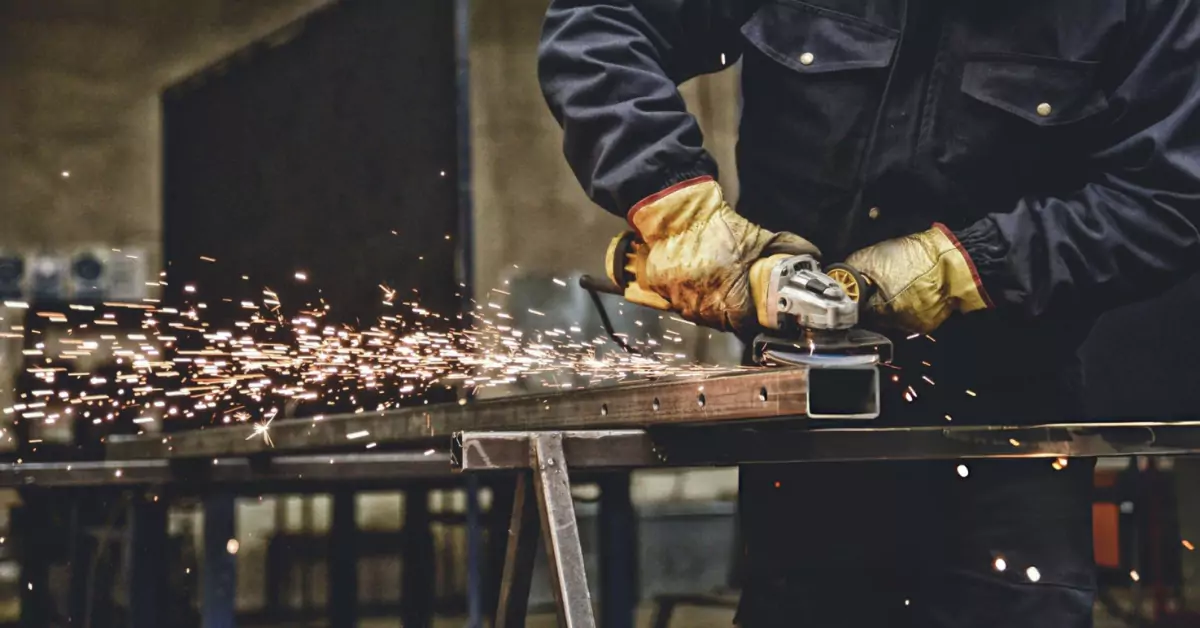
Water treatment plants operate under constant mechanical and chemical stress. Pipes carry raw water, treated water, chemical dosing solutions, and sludge across different stages of the treatment process, often under varying pressure and temperature conditions. This is where reliable steel fabrication becomes critical. From structural supports and platforms to pipe racks, tanks, and walkways, every component must be fabricated to withstand continuous exposure to moisture, chemicals, and mechanical wear.
Poorly fabricated structures can lead to corrosion, leaks, and even structural failure over time, resulting in costly plant downtime and safety hazards. This is why water treatment projects require fabrication partners who understand both the technical specifications and the long-term durability needs of such environments. Custom fabrication also allows plant designs to be adapted to site-specific layouts, unlike generic prefabricated components that may not fit unique treatment configurations.
The Critical Role of Flanges
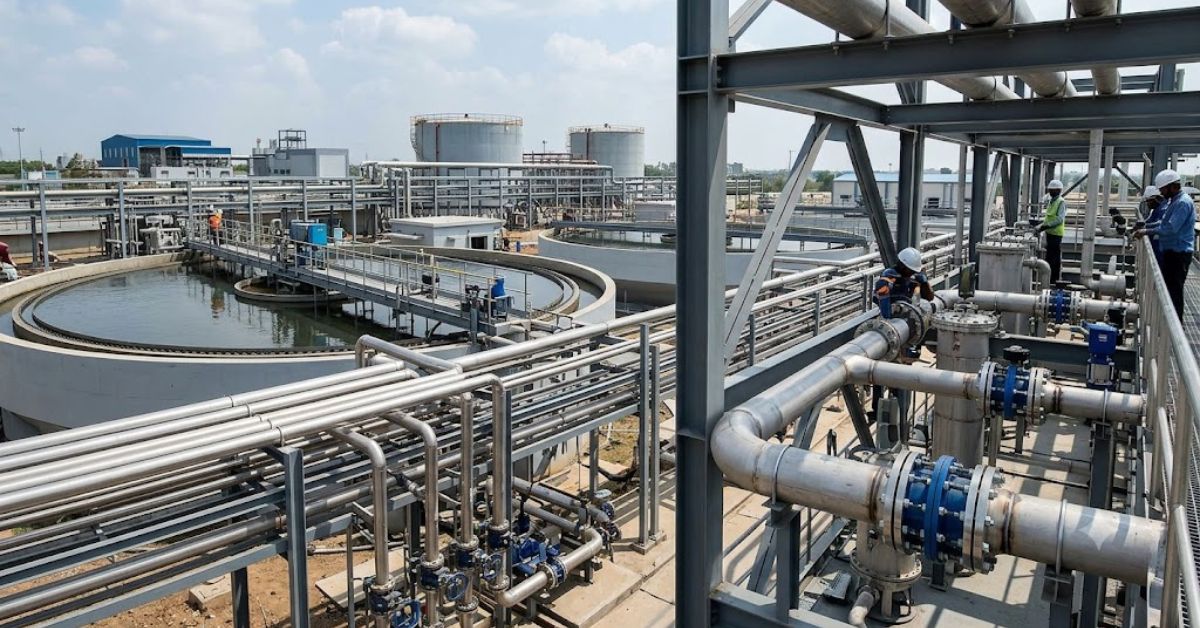
Flanges are among the most important components in any water treatment plant’s piping network. They connect pipes, valves, pumps, and other equipment, allowing sections to be assembled, dismantled, or maintained without cutting into the pipeline. In a treatment plant, where regular inspection and maintenance are unavoidable, flanged connections make it far easier to access filters, valves, and chemical dosing units without disrupting the entire system.
Different stages of water treatment call for different flange types. Clarifiers and sedimentation tanks often use slip-on flanges for straightforward, low-pressure connections, while high-pressure pumping stations may require weld neck flanges for added strength and leak resistance. Chemical dosing lines, which handle corrosive substances like chlorine or alum, typically need flanges made from corrosion-resistant materials such as stainless steel to prevent premature degradation.
Selecting the wrong flange type or material for a specific application can lead to frequent leaks, contamination risks, or unplanned maintenance shutdowns. This makes flange selection a decision that should involve both the plant’s process engineers and an experienced fabrication partner who can recommend the right specifications.
Key Areas Where Fabrication and Flanges Are Used in a Water Treatment Plant
- Intake structures and raw water pumping stations, where structural steel supports handle heavy pump loads
- Clarifiers and sedimentation tanks, requiring corrosion-resistant flanged piping for sludge and water flow
- Filtration units, where flanges allow quick access for filter media replacement and cleaning
- Chemical dosing systems, needing flanges built from materials resistant to chlorine, alum, and other reagents
- Sludge handling and dewatering equipment, which requires heavy-duty fabricated frames and wear-resistant connections
- Pipe racks and interconnecting pipelines, where flanged joints simplify future maintenance and system expansion
- Elevated platforms and walkways, fabricated for safe operator access to tanks and equipment at height
Why Location and Experience Matter
For projects based in South India, working with flange manufacturers in Chennai offers a practical advantage. Chennai has developed into a strong hub for industrial fabrication, with easier access to raw materials, skilled labour, and faster delivery timelines for projects across Tamil Nadu, Andhra Pradesh, and Karnataka. Plants under construction or expansion in this region benefit significantly from local sourcing, as it reduces logistics delays and allows for quicker on-site adjustments when custom specifications are needed.
Working with custom flange manufacturers also means treatment plants aren’t limited to standard catalogue sizes. Every water treatment facility has its own piping layout, pressure ratings, and space constraints, and custom fabrication ensures flanges are built to match these exact requirements rather than forcing a generic fit.
Choosing the Right Fabrication Partner
When selecting a provider for steel fabrication services and flange supply for a water treatment project, a few factors should guide the decision:
First, check for compliance with relevant standards such as ASME B16.5, which governs flange dimensions and pressure ratings. Second, evaluate the manufacturer’s material capabilities, since water treatment applications often require carbon steel, stainless steel, or specially coated components depending on the fluid being handled. Third, look for a track record with similar projects, as experience with treatment plants specifically (rather than general fabrication work) often translates into fewer design errors and faster project execution.
A reliable fabrication partner should also be able to support the project beyond just supply, offering guidance on material selection, dimensional accuracy, and long-term maintenance considerations.
Final Thought
Water treatment plants depend on more than just filtration technology and chemical dosing systems. The steel structures and flanges holding the entire piping network together play an equally important role in ensuring safe, efficient, and long-lasting operation. For engineers and contractors working on such projects in South India, partnering with an experienced fabrication team offering both structural steel work and custom flange solutions can make a measurable difference in project timelines, operational safety, and long-term maintenance costs.