

Foundation bolts are among the most critical components in any construction or industrial project — yet they are also among the most overlooked. A poorly installed foundation bolt can compromise an entire structure, leading to misalignment, equipment failure, or even safety hazards on site.
Whether you are anchoring heavy machinery, erecting steel columns, or installing industrial equipment, the way your foundation bolts are placed and set will directly affect the structural integrity of your project. This guide walks you through the correct installation process and highlights the most common mistakes that engineers and contractors make — so you can avoid costly rework.
What Are Foundation Bolts?
Foundation bolts – also called anchor bolts – are steel fasteners embedded into concrete foundations to secure structural elements like columns, machinery bases, equipment frames, and pre-engineered building structures. They act as the primary connection point between the concrete base and the steel structure above it.
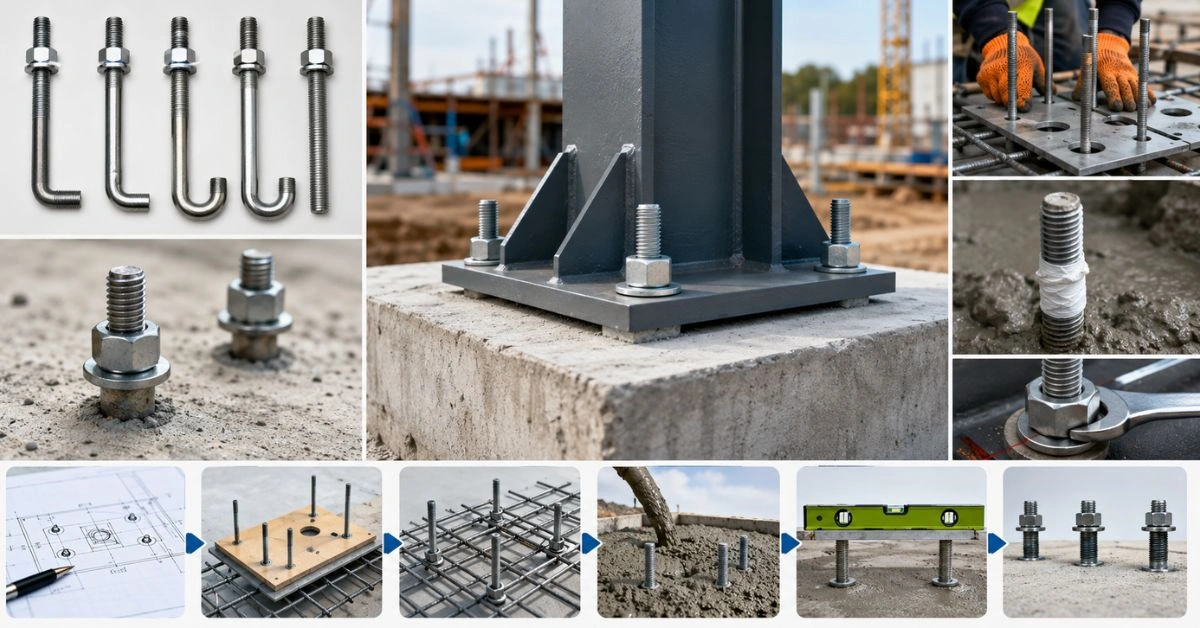
The most commonly used types are L-type, J-type, U-type, and straight-rod bolts. Each type is designed for specific load conditions and applications. As one of the established foundation bolts manufacturers in Chennai, E S Haji & Co supplies all standard types in carbon steel, stainless steel SS 304/316, and galvanized finishes — custom-sized as per project drawings.
Step-by-Step Foundation Bolt Installation Process
Before identifying what can go wrong, it helps to understand what correct installation looks like. Here is the standard process followed on most industrial and construction sites.
Review drawings carefully before anything else. Verify bolt diameter, projection length, spacing, and grade before placing the order or starting installation. Next, set a steel template or jig to hold bolts in exact position before pouring concrete — this is critical for maintaining bolt pattern accuracy. Each bolt must then be positioned perfectly vertical using a spirit level or plumb bob, and secured to the rebar cage by tying or tack welding so bolts do not shift during the pour.
During the pour, avoid striking bolts directly with vibrators. Once concrete has partially set, recheck bolt projection and plumb – minor corrections can still be made at this stage. Finally, never place structural loads or torque nuts onto foundation bolts before the concrete reaches its full compressive strength, which is typically 28 days for standard mixes.
Common Mistakes in Foundation Bolt Installation
Mistake 1 — Using the Wrong Bolt Type
Not all foundation bolts are interchangeable. An L-type bolt offers different pull-out resistance compared to a J-type or U-type. Using a straight bolt where an L-type is specified — simply because it was available — can lead to anchor failure under load. Always refer to the structural engineer’s drawing for the specified type. If you are sourcing from a foundation bolts supplier in Chennai, share the drawing directly so the right configuration is manufactured.
Mistake 2 — Incorrect Projection Length
The projection (exposed length above concrete) must match the base plate thickness, washer, and nut stack-up. Too short and you cannot fully engage the nut. Too long and trimming on site weakens the thread engagement zone. Calculate projection as base plate thickness plus washer plus full nut height plus 2–3 thread pitch clearance. Reputed foundation bolts manufacturers in India will assist with this if you provide the base plate drawing.
Mistake 3 — No Template Used During Pouring
Holding bolts by hand during the pour almost always results in position errors. Even a 5mm shift can make it impossible to fit the base plate later, requiring expensive rework. Always use a rigid steel template matching the base plate bolt hole pattern.
Mistake 4 — Wrong Material Grade for the Environment
Standard carbon steel is adequate for dry or protected environments. But in coastal areas, chemical plants, water treatment facilities, or food processing units, carbon steel corrodes rapidly. Use SS 304 or SS 316 foundation bolts for corrosive or humid environments. For projects in Chennai’s coastal climate, many foundation bolts suppliers in Chennai now recommend hot-dip galvanized or SS options as standard.
Mistake 5 — Applying Torque Before Concrete Cures
Tightening nuts before concrete reaches full compressive strength can crack the foundation or cause bolts to shift. Wait a minimum of 28 days for standard M20 concrete before applying design torque. For fast-track projects with rapid-setting concrete, follow the specific curing schedule from the mix design.
Mistake 6 — Ignoring Thread Protection During the Pour
Cement slurry sets in exposed threads during pouring, making it impossible to fit nuts cleanly later. Wrap exposed threads with foam, tape, or grease-soaked cloth before the pour and remove only after the concrete has set.
Choosing the Right Foundation Bolts
Beyond installation technique, the quality and specification of the bolt itself matters. Verify material grade — IS 1367 or ASTM A307 for standard civil use, higher grades for heavy machinery or dynamic loads. Confirm the thread standard, whether metric or inch-based. Choose the right finish — plain, zinc-plated, hot-dip galvanized, or stainless — based on the environment. For non-standard dimensions or custom bolt circle diameters, always work with a manufacturer who produces to your drawing rather than supplying from stock.
As a trusted name among foundation bolts manufacturers in Chennai, E S Haji & Co manufactures L-type, J-type, U-type, T-type, and straight anchor bolts to custom drawings in carbon steel and stainless steel, with threading, bending, and finishing all done in-house at the Ambattur facility.
Final Thoughts
Foundation bolts may be small components in the overall scope of a project – but their correct installation is non-negotiable. A misplaced bolt, the wrong material grade, or premature loading can trigger a chain of structural problems that cost far more to fix than they would have to prevent.
Working with experienced foundation bolts manufacturers in India who understand both the product and the application makes a significant difference. At E S Haji & Co, every bolt is manufactured to drawing with full dimensional checks before dispatch. To discuss your project requirements, feel free to Contact Us.